AI Ad Copy Generator: How Can AI Create More Effective Advertising Copy?
How can businesses create compelling ad copy faster without sacrificing quality? Can artificial intelligence turn a simple product description into persuasive headlines, descriptions, and calls to action? An AI Ad Copy Generator uses artificial intelligence to help marketers produce advertising text based on a product, audience, campaign objective, and selected platform.
Instead of starting every campaign with a blank page, marketers can use AI to generate multiple copy variations within seconds. These variations can then be reviewed, refined, and tested to identify messaging that resonates with the intended audience.
What Is an AI Ad Copy Generator?
An AI Ad Copy Generator is a software-based writing solution designed to create advertising content automatically. It analyzes information provided by a marketer and generates copy suitable for different advertising formats. Depending on the platform, it can create headlines, primary ad text, product descriptions, calls to action, social media advertisements, search ad variations, promotional messages, and short-form advertising copy. The technology typically uses natural language processing and large language models to understand context, tone, keywords, and marketing objectives.
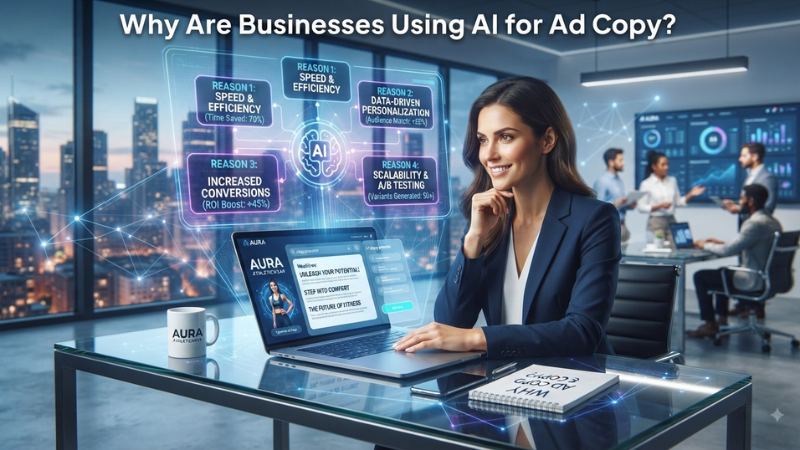
Why Are Businesses Using AI for Ad Copy?

Creating advertising copy manually can become repetitive, particularly when campaigns require dozens of variations. AI can reduce the time involved in generating initial ideas while giving marketers more options to consider. It can produce multiple copy concepts quickly, which is especially useful when businesses need different messages for various audiences, products, or campaigns.
AI also supports creative testing by generating alternative headlines and messages. Instead of relying on a single advertising concept, marketers can test different approaches and identify which messaging performs better. Personalization is another advantage because different audience segments may respond to different benefits, such as price, convenience, quality, or performance.
For smaller marketing teams, AI can also reduce repetitive writing workloads. Marketers can spend more time on campaign strategy, audience research, creative direction, and performance analysis while using AI to assist with initial copy development.
How Does AI Generate Advertising Copy?
How can an AI Ad Copy Generator understand what makes an advertisement persuasive? It combines the advertiser’s input with advanced language-generation technology to create relevant and engaging ad copy. First, the marketer provides campaign details such as the product or service, target audience, key benefits, campaign objective, and preferred tone. The AI Ad Copy Generator then uses this information to develop advertising content tailored to formats such as search ads, social media advertisements, display campaigns, or promotional content.
After receiving these details, the AI analyzes the information and produces several copy variations with different headlines, value propositions, messaging angles, and calls to action. The generated content can then be reviewed and refined to improve accuracy, brand consistency, clarity, and compliance with advertising policies before publication.
What Makes AI-Generated Ad Copy Effective?
Generating text is only the first step. Effective advertising copy must give the audience a clear reason to pay attention and take action. A strong advertisement should begin with a relevant headline that captures attention while clearly communicating the primary benefit of the offer. The messaging should address a genuine audience need or problem instead of relying on vague statements.
Specific and concise language can make advertisements easier to understand, while a strong call to action gives readers a clear next step. Brand consistency is equally important because the wording should match the company's established personality and communication style. For example, rather than simply describing a product as "high quality," effective copy can explain the specific benefit that makes the product valuable to its intended audience.
How Can Marketers Use AI Ad Copy Responsibly?

AI-generated content should support marketing expertise rather than replace it. Human review remains essential because AI can occasionally produce inaccurate claims, repetitive language, unsupported statements, or messaging that does not match a brand's positioning.
Before publishing AI-generated copy, marketers should verify factual claims and product information, remove exaggerated promises, check grammar and clarity, and confirm that the messaging matches the intended audience. They should also review platform-specific advertising requirements and ensure that the final copy reflects the company's brand personality.
The strongest workflow combines AI-assisted ideation with human judgment, strategic positioning, fact-checking, and performance analysis. This approach allows businesses to benefit from AI's speed without sacrificing the quality and credibility of their advertising.
Can AI Improve Ad Performance?

AI does not automatically guarantee better content results. The effectiveness of AI content creation depends on several factors, including content quality, audience needs, topic relevance, brand voice, originality, and proper editing. However, AI can make the content creation process more efficient by helping marketers generate ideas, develop multiple content variations, streamline writing, and accelerate the production of engaging content.
Once different advertisements are running, marketers can compare metrics such as click-through rate, conversion rate, cost per click, cost per acquisition, return on ad spend, and engagement rate. These results can reveal which messaging resonates with the target audience and provide useful insights for future campaigns.
What Should Businesses Look for in an AI Ad Copy Tool?
Not every AI advertising solution offers the same capabilities. Businesses should consider whether a tool supports multiple copy variations, customizable tones, brand voice controls, audience-specific messaging, platform-specific formats, keyword integration, editing and rewriting, and campaign experimentation.
The best solution is not necessarily the one that generates the largest amount of text. A useful tool should help marketers create relevant, accurate, clear, and testable advertising messages while giving them enough control to adapt the output to specific campaigns.
You can also watch: Manage All Your Meta Ads in One Dashboard
Summary
AI-powered advertising tools are changing how marketers approach digital display advertising. Digital display advertising can help businesses create visually engaging campaigns, reach specific audiences, deliver personalized messages, and improve brand visibility across websites, apps, and digital platforms. However, effective digital display advertising still requires strong campaign strategy, audience understanding, accurate messaging, creative judgment, and continuous performance testing.
AI works best as a creative and productivity assistant rather than as a complete replacement for marketing expertise.
Frequently Asked Questions
What is an AI Ad Copy Generator used for?
An AI Ad Copy Generator is used to create advertising headlines, descriptions, calls to action, promotional messages, and other marketing copy based on campaign information and marketing objectives.
Is AI-generated ad copy ready to publish?
Not always. Marketers should review generated content for accuracy, brand alignment, clarity, unsupported claims, and advertising-policy compliance before publishing it.
Can AI create different versions of the same advertisement?
Yes. AI can create multiple variations using different headlines, benefits, tones, calls to action, and messaging angles. These variations can help marketers conduct creative testing more efficiently.
Can AI replace professional copywriters?
AI can automate parts of the copywriting process, but human expertise remains important for marketing strategy, positioning, creativity, brand voice, audience understanding, and final quality control.
How can businesses get better results from AI-generated copy?
Businesses can improve results by providing detailed product information, clearly defining the target audience and campaign objective, requesting several messaging variations, reviewing the generated content carefully, and using real campaign performance data to guide future creative decisions.


Comments